French Drain vs. Dry Creek Bed vs. Grading: Which Drainage Solution Does Your Yard Need?
Standing water, soggy grass, washed-out mulch, and muddy low spots are common problems for homeowners in Round Rock and throughout Central Texas. Between heavy downpours, clay-heavy soil, sloped yards, compacted areas, and runoff from roofs, patios, driveways, and neighboring properties, water can quickly become one of the biggest threats to your lawn and landscape.
The tricky part is that not every drainage problem needs the same solution.
Some yards need a French drain to collect water below the surface. Others need a dry creek bed to guide visible runoff in a way that also improves curb appeal. In some cases, the real issue is poor grading, where the yard simply does not slope correctly and water is pooling in the wrong places.
Understanding the difference between French drains, dry creek beds, and grading can help you make a smarter decision for your property. At Oak Grove Lawn and Landscape, our drain construction services in Round Rock are designed to help homeowners solve drainage issues with solutions built around the yard’s slope, soil, water flow, and long-term landscape goals.
Table of Contents
- Why Yard Drainage Matters in Round Rock
- What Is a French Drain?
- When a French Drain Makes Sense
- What Is a Dry Creek Bed?
- When a Dry Creek Bed Makes Sense
- What Is Yard Grading?
- When Grading Makes Sense
- French Drain vs. Dry Creek Bed vs. Grading
- Signs Your Yard Needs Better Drainage
- Drainage and Irrigation Should Work Together
- Drainage Should Support the Overall Landscape Design
- Which Drainage Solution Does Your Yard Need?
- FAQs About Yard Drainage in Round Rock
- Work With a Round Rock Drainage Contractor
Why Yard Drainage Matters in Round Rock
Drainage is one of the most important parts of a healthy outdoor space. When water does not move properly through your yard, it can affect your grass, plants, soil, mulch, hardscaping, and outdoor living areas. What starts as a small soggy spot can eventually become a larger issue involving erosion, thinning turf, plant stress, pest activity, or recurring landscape damage.
Round Rock yards are especially vulnerable because Central Texas weather can shift quickly. A dry stretch can be followed by a heavy storm, and compacted or clay-heavy soil may not absorb water fast enough. Instead of soaking evenly into the ground, water can run across the surface, collect in low spots, or wash through planting beds.
A well-planned drainage solution helps redirect excess water, protect your lawn, reduce erosion, and keep your outdoor space more usable after rain. The right approach depends on what type of water problem you are dealing with.
What Is a French Drain?
A French drain is a subsurface drainage system designed to collect and redirect water below the surface. It typically uses a gravel-filled trench and perforated pipe to move water away from soggy areas, low spots, or places where soil stays wet for too long.
French drains are often a good option when the ground remains saturated even after the rain has stopped. They can help manage water that seeps through soil, collects along slopes, or sits near lawn areas, planting beds, retaining areas, or the side of a home.
For homeowners searching for a French drain in Round Rock, this type of system may be helpful if your lawn feels soft underfoot, certain sections remain wet for days, or grass and plants are struggling because the soil holds too much moisture.
French drains are not always the most visible drainage solution, which can be a benefit. When installed correctly, they work beneath the surface and can blend into the overall landscape with minimal visual disruption.
When a French Drain Makes Sense
A French drain may be the right drainage solution if your yard has persistent soggy areas, water moving through the soil, moisture collecting along a slope, or low areas that stay wet after storms. It can also be useful when water needs to be moved away from a specific part of the property without creating a visible drainage channel.
This type of solution is especially helpful for lawns and landscapes where water saturation is weakening turf or plant roots. Too much moisture can lead to root problems, thinning grass, muddy patches, and overall landscape stress.
However, a French drain needs to be designed correctly. The slope, outlet location, soil conditions, and water source all matter. Installing a drain without understanding how water moves through the property can lead to poor performance or simply move the problem somewhere else.
That is why Oak Grove Lawn and Landscape begins with a site evaluation before recommending a drainage system. Our team looks at water flow, low spots, soil, downspouts, lawn areas, beds, and hardscapes to determine whether a French drain is the right fit.
What Is a Dry Creek Bed?
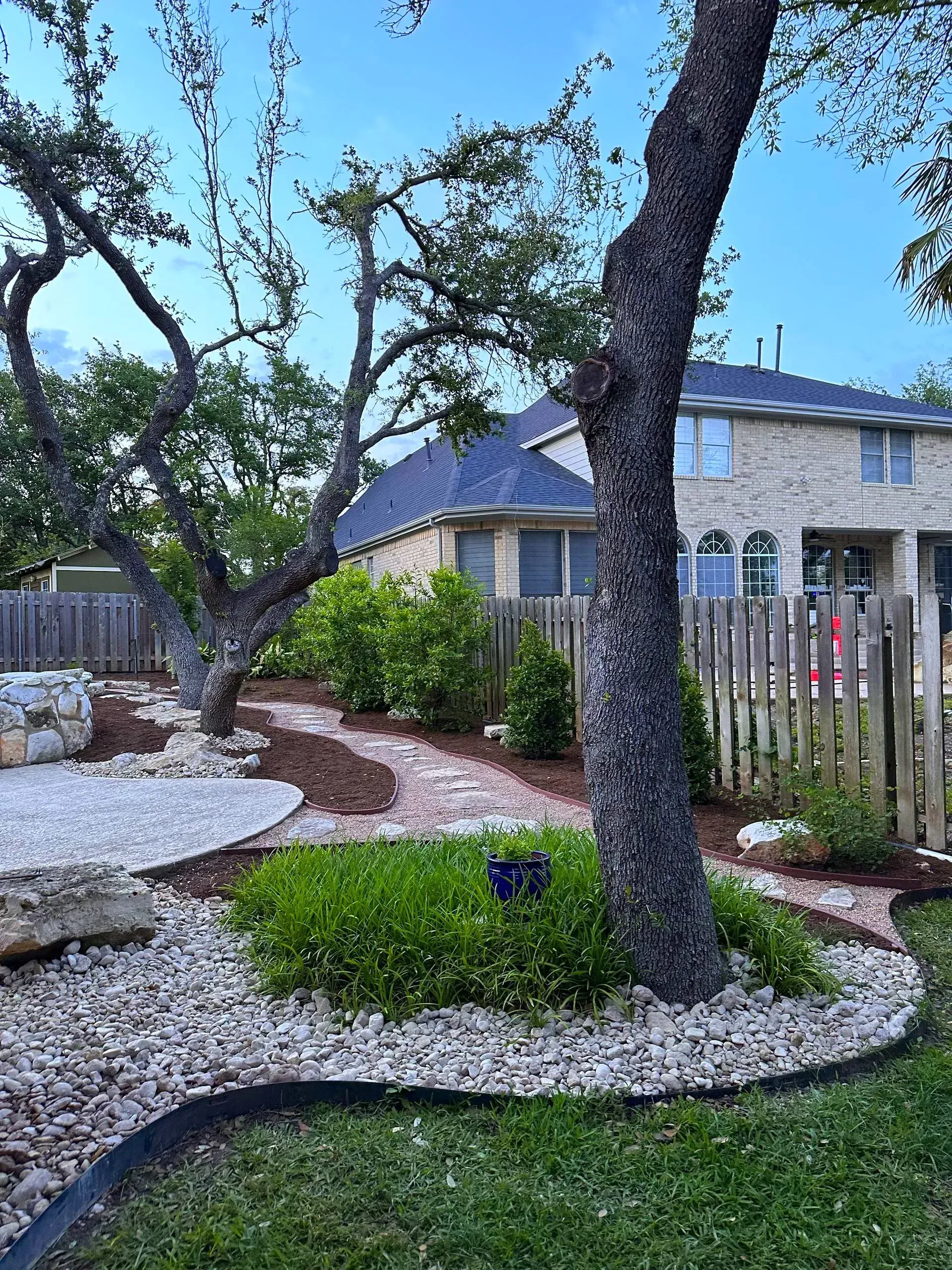
A dry creek bed is a rock-lined drainage feature designed to guide surface water through the landscape. Unlike a French drain, which usually works underground, a dry creek bed is visible and can become part of the overall landscape design.
Dry creek beds are often built with river rock, boulders, stone, and carefully selected plants to create the look of a natural creek or limestone wash. When it rains, the creek bed helps direct runoff through the yard. When it is dry, it still adds texture, structure, and visual interest to the landscape.
For homeowners who want both function and curb appeal, a dry creek bed in Round Rock can be a smart choice. It can help manage water while also improving the appearance of areas that might otherwise look bare, washed out, or difficult to maintain.
Dry creek beds can work especially well in front yards, side yards, sloped areas, garden beds, and spaces where water naturally travels across the surface.
When a Dry Creek Bed Makes Sense
A dry creek bed may be the right option if your yard has visible surface runoff, erosion, washed-out mulch, bare soil, or water flowing through the same path during storms. It can also be a strong solution when you want drainage to look intentional instead of purely functional.
This approach can be especially helpful for landscapes where water moves across planting beds or down a slope. Instead of allowing runoff to wash away soil and mulch, a dry creek bed gives water a defined path while helping protect surrounding plants and turf.
Dry creek beds can also pair well with native Central Texas plants. Native and well-adapted plants can soften the appearance of stone, improve the finished design, and support a lower-maintenance landscape that fits Round Rock’s climate.
For properties that need both drainage and design improvement, a dry creek bed may be one of the most attractive options.
What Is Yard Grading?
Yard grading is the process of shaping the slope of the land so water moves in the right direction. In many drainage situations, grading is the foundation of the solution. If the yard is sloped incorrectly, water may pool near the home, collect in low spots, run toward patios, or wash through landscape beds.
Grading can help redirect water away from problem areas and create a more stable base for lawns, sod, planting beds, and hardscaping. It may involve reshaping soil, adjusting slopes, filling low areas, or creating a smoother path for water to move through the property.
For homeowners searching for yard grading in Round Rock, this solution is often needed when water is pooling because of the way the land is shaped, not because of one isolated drainage issue.
Grading can be used on its own or combined with French drains, dry creek beds, catch basins, swales, or other drainage systems.
When Grading Makes Sense
Grading may be the right solution if your yard slopes toward the house, water pools in multiple low spots, runoff flows toward patios or walkways, or parts of your lawn feel uneven and difficult to maintain. It can also be useful when preparing for larger landscape upgrades.
For example, if you are installing new sod, creating planting beds, adding hardscaping, or improving your front yard, it is important to address grading before the finished work goes in. Otherwise, the new landscape may still experience the same drainage problems.
Proper grading can also support successful sod installation in Round Rock. New sod needs the right soil preparation, water distribution, and drainage conditions to establish properly. If water pools in certain areas or runs off too quickly, turf performance can suffer.
When grading is handled as part of a complete landscape plan, the entire yard becomes easier to maintain and better prepared for long-term success.
French Drain vs. Dry Creek Bed vs. Grading
The best drainage solution depends on how water is behaving in your yard.
A French drain is often best for subsurface water, soggy soil, and areas that stay wet after storms. It helps collect moisture below the surface and move it away from problem areas.
A dry creek bed is often best for visible surface runoff, erosion, and water that travels across the yard during heavy rain. It gives water a defined path while also adding natural-looking design value.
Grading is often best when the slope of the yard is causing water to pool or move in the wrong direction. It reshapes the land so water drains more effectively.
In many cases, the best drainage solution is not just one of these options. A yard may need grading to correct the slope, a French drain to manage saturated soil, and a dry creek bed to control visible runoff. Oak Grove Lawn and Landscape can help determine the right combination for your property.
Signs Your Yard Needs Better Drainage
You may need professional landscape drainage in Round Rock if you notice standing water after rain, soggy grass, muddy low spots, washed-out mulch, exposed roots, erosion, water collecting near patios or walkways, or plant beds that struggle after storms.
Other warning signs include grass that stays thin in certain areas, mosquito activity around wet spots, soil washing away during heavy rain, or water flowing toward your foundation instead of away from it.
These problems often get worse over time if they are not addressed. A minor drainage issue can turn into a recurring lawn care problem, especially when it begins damaging turf, plant roots, and soil structure.
Oak Grove’s drainage solutions can work alongside lawn care and maintenance in Round Rock to help keep your yard healthier, cleaner, and easier to enjoy throughout the year.
Drainage and Irrigation Should Work Together
Drainage is not only about managing stormwater. It also affects how your irrigation system performs. If parts of your yard are overwatered, poorly graded, or not draining correctly, irrigation can make the problem worse.
A sprinkler system that runs too long or waters unevenly can create soggy areas, runoff, dry patches, and plant stress. On the other hand, a properly designed irrigation system can support healthy turf and plants without wasting water or overwhelming the soil.
Oak Grove’s irrigation services in Round Rock can help improve how water is distributed across your property. When irrigation and drainage are planned together, your landscape has a better chance of staying balanced, efficient, and healthy through both dry spells and heavy rain.
Drainage Should Support the Overall Landscape Design
The best drainage solutions do more than move water. They also support the look, function, and long-term health of your outdoor space.
A dry creek bed can become a natural focal point. Grading can make a yard easier to use. A French drain can protect turf and planting beds without changing the appearance of the landscape. When drainage is planned with the full property in mind, the finished result feels more intentional and works better over time.
That is why drainage often pairs well with landscape design and installation in Round Rock. If you are already refreshing your yard, adding new beds, installing sod, or improving curb appeal, drainage should be part of the conversation from the beginning.
Ignoring drainage during a landscape project can lead to washed-out beds, failing sod, eroded soil, and repeated repair costs later.
Which Drainage Solution Does Your Yard Need?
The right drainage solution depends on the source of the water, how it moves through your property, and where it collects. A French drain may be best if the soil stays saturated. A dry creek bed may be best if water flows visibly across the yard. Grading may be best if the slope is directing water into the wrong areas.
Some yards need one solution. Others need a combination.
The most important step is a professional evaluation. Oak Grove Lawn and Landscape can assess your yard’s slope, soil, runoff patterns, downspouts, low spots, lawn condition, planting beds, and existing landscape features to recommend a drainage approach that fits your property.
FAQs About Yard Drainage in Round Rock
What is the best drainage solution for standing water in my yard?
The best solution depends on whether the water is collecting on the surface, soaking into the soil, or coming from poor grading. French drains, catch basins, grading, and dry creek beds may all be considered depending on the property.
Is a French drain better than a dry creek bed?
Neither option is automatically better. A French drain is usually better for subsurface moisture and soggy soil, while a dry creek bed is often better for visible runoff and erosion control.
Can a dry creek bed really help with drainage?
Yes. A properly designed dry creek bed can help guide stormwater through the yard while also creating an attractive landscape feature.
Does grading help prevent water from pooling near my home?
Proper grading can help direct water away from problem areas, including areas near the home, patios, walkways, and low lawn sections.
Can drainage problems damage new sod?
Yes. Poor drainage can cause new sod to struggle by creating soggy areas, runoff, root stress, and uneven growth. Drainage should be evaluated before major sod installation projects.
Should drainage be planned before landscaping?
Yes. Drainage should be considered before installing new sod, planting beds, hardscapes, mulch, or outdoor living features. Planning drainage early helps protect the finished landscape.

Work With a Round Rock Drainage Contractor
If your yard has standing water, erosion, soggy grass, washed-out mulch, or runoff problems, Oak Grove Lawn and Landscape can help. Our team provides professional drainage solutions in Round Rock designed to protect your lawn, improve soil stability, support healthier plants, and make your outdoor space more usable after rain.
Whether your property needs a French drain, dry creek bed, grading, catch basin, or a custom drainage system, we can evaluate your yard and recommend the right approach. We can also combine drainage improvements with landscaping, irrigation, native plants, sod installation, and ongoing lawn care for a more complete outdoor solution.
Contact Oak Grove Lawn and Landscape today to schedule a drainage consultation and find the right solution for your Round Rock yard.
You might also like